

Categories
Top 5 Mistakes People Make When Appointing an Executor
The Executor (or Estate Trustee) of your estate manages the administration and distribution of your estate after your death. This role comes with significant responsibility and can require substantial time commitment.
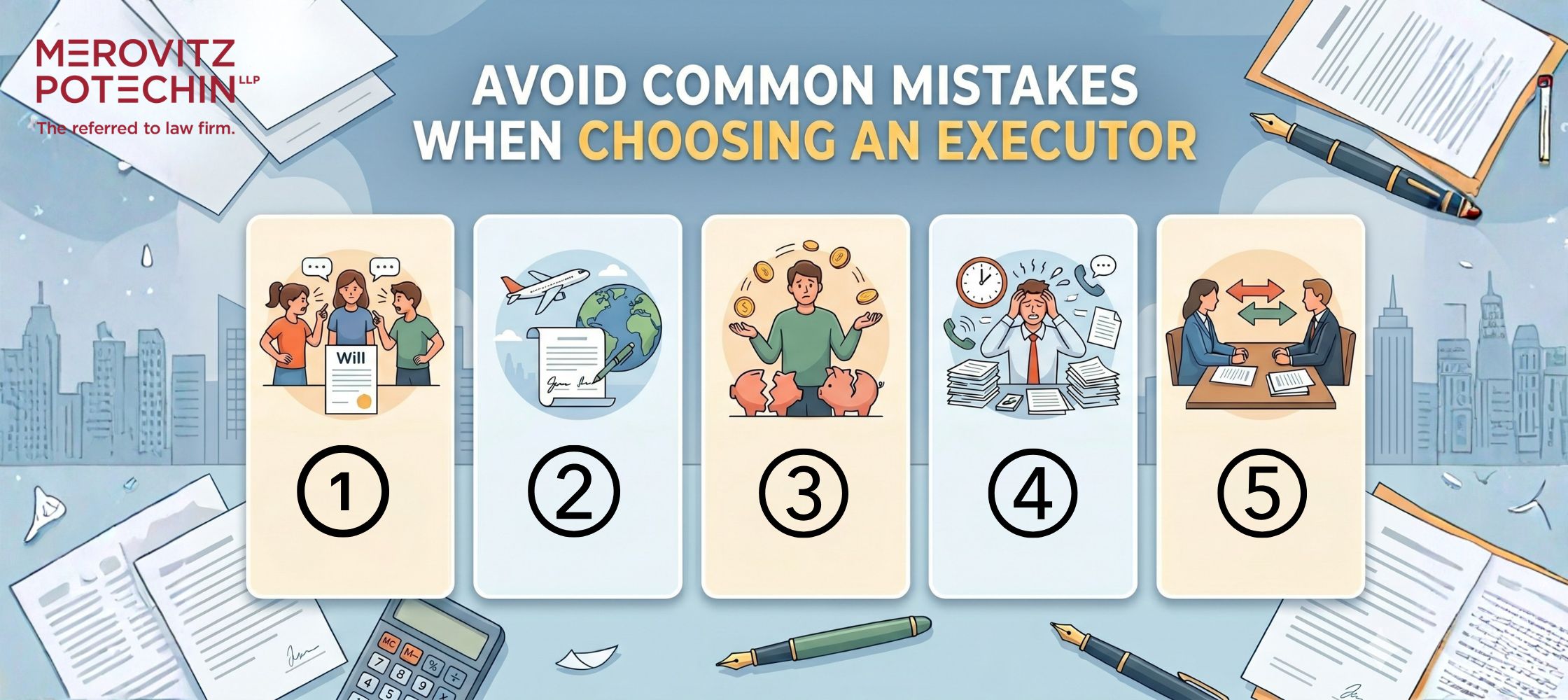
Here are the 5 most common mistakes people make when appointing an Executor:
1. Appointing all your children in a desire to be “fair”
Acting as an Executor of an estate is not a privilege you are bestowing on a person. You are asking that that person dedicate significant time and effort to carry out your wishes. By appointing multiple people as co-executors of your estate, you are furthering the burden as all those people are required to act together on every action and every decision. If there is any type of conflict between the children, the joint appointment is likely to exacerbate it.
2. Appointing someone from a different jurisdiction (or multiple jurisdictions)
Video conferencing and e-signatures alleviate the burden of having to appearing in person to act on behalf of the estate. However, a number of institutions still require you to attend in person to sign estate documents. This often forces the executor(s), and by extension, the estate and beneficiaries, to incur significant costs if they have to travel distances.
If your Will contains certain trusts, a non-resident executor may result in certain tax implications and questions as to jurisdiction and residency of the trusts.
3. Appointing someone who is irresponsible with money
An executor has a fiduciary duty to the estate and its beneficiaries. Appointing someone who is bad with money is asking for trouble. An estate trustee is required to keep records of all transactions relating to the estate, and the beneficiaries of an estate are entitled to an accounting from the estate trustee. Failure of the executor to properly carry out these duties can result in legal challenges, personal liability of the executor and financial loses to the beneficiaries.
4. Appointing someone who has other substantial time commitments
As previously stated, acting as an executor requires a significant time commitment. Beneficiaries of the estate are entitled to receive their share of the estate within a reasonable time period. Failing which, they may bring an action to remove the executor. A person with many other commitments may not be the right choice. They may struggle to act within a reasonable amount of time.
5. Appointing co-executors where there is known conflict
Not everyone gets along, and that’s okay; but we recommend against appointing two or more people as co-executors if you know conflict exists between them. This conflict often prevents parties from communicating effectively (or communicate at all in some instances). Consequently, the lack of communication delays the administration of the estate.
If you are starting to think about preparing a Will and appointing an executor of your estate, our Wills Team can answer your questions and provide recommendations based on your needs. Contact us today to book a consultation.
This website provides information only and does not offer legal advice. We cannot provide legal advice without knowing the facts of your specific situation. You should never disregard professional legal advice or delay in seeking legal advice because of something you have read on this website. The use of the website does not establish a solicitor and client relationship. If you would like to discuss your specific legal needs with us, please contact our office at 613-563-7544 and one of our lawyers will be happy to assist you.
The content on this website is for information purposes only and is not legal advice, which cannot be given without knowing the facts of a specific situation. You should never disregard professional legal advice or delay in seeking legal advice because of something you have read on this website. The use of the website does not establish a solicitor and client relationship. If you would like to discuss your specific legal needs with us, please contact our office at 613-563-7544 and one of our lawyers will be happy to assist you.